Solitaire Cruise: Card Games
- 4.5
- Rating
- 10.00M
- Installs
- Free
- Price
 Analysis by App-foxy
I spent time with Solitaire Cruise: Card Games as a casual card game, and its appeal became clear quickly: it turns Tri Peaks Solitaire into a light sea-themed journey that is easy to pick up when I have only a few minutes. It is free to download, aimed at Everyone, and made by BELKA GAMES. That combination makes it approachable for families, occasional players, and anyone who wants a familiar patience game without learning a complicated ruleset.
What matters here is not a huge collection of card variations, but the way one recognizable solitaire format is presented as a sequence of short challenges. I found it comfortable for small breaks, especially when I wanted something more active than simply scrolling but less demanding than a strategy or action game. At the same time, the free-to-play structure means I would not recommend approaching it as a completely pressure-free deck of cards. The game is best understood as a polished casual pastime whose enjoyment depends on how comfortably you handle progression and optional spending.
How the Tri Peaks format works in everyday play
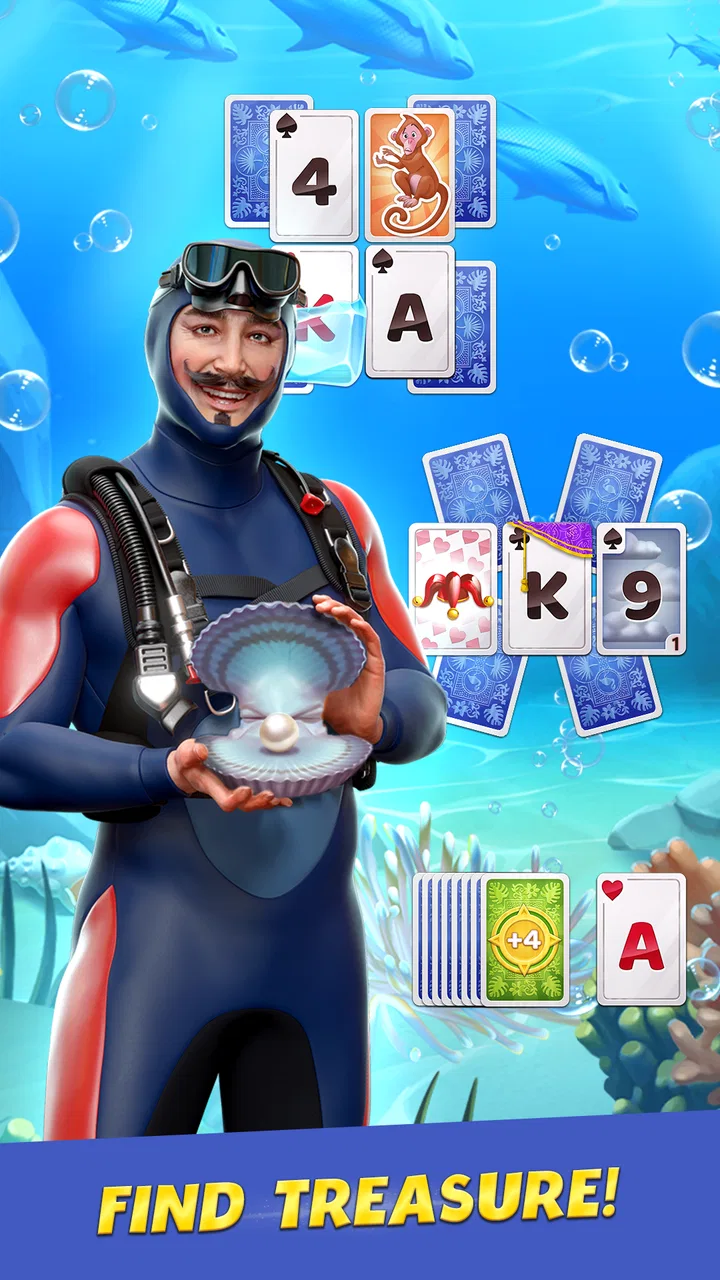
The central experience is Tri Peaks Solitaire. Cards are arranged in several peaks, and I clear them by selecting a card that is one rank above or below the current card in the waste pile. Aces can connect with twos and kings depending on the active sequence, while unavailable moves leave me looking for another route through the layout. The rules are simple enough to understand almost immediately, but the decisions are not entirely automatic.
You May Also Like

 AccuWeather: Weather Radar
AccuWeather Review: A Quick, Clear Forecast for Everyday Decisions
For everyday plans, the best forecast is the one you can understand quickly. AccuWeather makes rain timing, radar, and local conditions easy to act on, with a few trade-offs.

 Hill Climb Racing
Why Hill Climb Racing Still Turns Crashes Into One More Run
A tiny car, a bumpy hill and one more upgrade: Hill Climb Racing keeps resurfacing because its simple chaos makes every near-miss feel personal.

 AliExpress - Shopping App
AliExpress Makes Global Shopping Feel Personal, but Shoppers Bear the Risk
AliExpress turns a global marketplace into a pocket-sized discovery engine. Its reach is useful, its shopping loop compelling, and its trade-offs easy to miss.

 Lords Mobile: Kingdom Wars
Lords Mobile Is a Kingdom-Building Routine, Not a Quick Match
A case-by-case verdict on the building, battles, device demands, and social commitments that make Lords Mobile rewarding for some players and exhausting for others.

 PDF Scanner app - TapScanner
TapScanner Makes Paperwork Easier to Capture, Check, and Share
TapScanner makes scanning with a phone feel less like a rescue operation and more like a dependable step in getting work done. Its capture tools are useful, though not flawless.

 Block Blast!
 Shows How Much a Puzzle Game Can Leave Out
A quiet grid game shows why puzzle players increasingly value instant clarity, repeatable skill and low-pressure play—and where the genre still needs to catch up.
More From Our News Desk
View All News


The satisfying part is building a run. If I clear several cards consecutively, I can expose more of the layout and preserve options for later. A careless choice can break that rhythm, leaving covered cards behind and forcing me to depend on the remaining stock. That gives each short round a small planning layer, even though the game never feels like a heavy puzzle title.
The sea-tour presentation gives the individual rounds a sense of place. Instead of feeling like an isolated digital deck, the game frames progress as movement through a cruise-style journey. I found that useful psychologically: completing one level gives me a natural stopping point, while a difficult board creates a clear reason to try again. The theme does not replace the card mechanics, but it makes repeated solitaire layouts feel less plain than the standard card app on many phones.
For a realistic everyday scenario, I would use it during a short commute, while waiting for an appointment, or after finishing a task when I want a brief mental reset. A round can be approached casually, but the need to watch the current sequence keeps my attention better than a completely passive activity. I would not choose it for a long uninterrupted gaming session unless I already enjoyed solitaire, because the basic interaction remains intentionally repetitive.
Small decisions make the difference
My most useful habit was resisting the urge to play the first available card. In Tri Peaks, an immediate move is not always the best move. I try to inspect the exposed cards first and choose the option that opens the most useful section of the board, especially when two or more cards can follow the same rank. That approach helps preserve future links rather than simply extending the current run.
Another practical tip is to treat the stock as a limited resource rather than a rescue button. When I draw too quickly, I lose track of which ranks might become valuable later. Taking a moment to identify the cards that are still covered helps me decide whether to pursue a longer chain or accept a smaller clear. This is a modest technique, but it changes the game from random tapping into a more deliberate routine.
I also found that a failed round can be informative. Instead of immediately repeating the same choices, I look at the point where the sequence collapsed. Often the problem was not the final unavailable card, but an earlier decision that removed the only useful connector. That makes retries feel more constructive, provided I am in the mood to think rather than simply pass time.
Who will enjoy the pacing
This is a good match for people who like classic solitaire but want a more guided journey than a bare card table. It is also suitable for players who prefer short sessions, gentle rules, and progress that can be followed visually. Someone introducing a family member to mobile card games may appreciate the familiar logic and Everyone content rating.
It is less suitable for a player seeking deep deck-building, competitive multiplayer, or a broad collection of unrelated card games. The Tri Peaks foundation is the main attraction, so anyone who quickly tires of repeated solitaire rounds may find the cruise framing insufficient to keep the experience fresh. I would also skip it if I wanted a fully traditional card app with minimal decoration and no progression pressure.
Compared with a standard solitaire application, this game feels more like a journey than a utility. A traditional app may be better when I want direct control over a familiar deal, a cleaner interface, or several classic formats in one place. Compared with a puzzle game, Solitaire Cruise is gentler and easier to pause, but it offers less variety in the type of thinking required. Its strongest position is between those two options: more structured than a plain card table, yet calmer than most puzzle games.
Free access, purchases, and the feeling of progress
The game is free, but it includes in-app purchases ranging from $0.29 to $199.99 per item. That is the purchase context I keep in mind before starting. The range covers small and very large transaction points, so I would treat the game as something to try without paying first and only consider spending after deciding whether its core loop genuinely suits me.
I prefer to separate enjoyment of the card play from the temptation to accelerate progress. If I am playing because I like planning a Tri Peaks board, restarting a difficult level or waiting for another opportunity is part of the experience. If I start judging every failed round by how much faster a purchase might make it, the relaxing quality disappears. Setting a personal spending boundary before playing is therefore more useful than making an emotional decision after a frustrating board.
The important fairness question is whether success feels connected to choices rather than simply to payment. From my perspective, the strategic value comes from selecting cards carefully, preserving sequences, and managing the layout. However, a free-to-play game can still create pressure through its progression structure, even when the card rules themselves remain understandable. I would pay attention to how often I feel pushed toward a purchase, especially after several unsuccessful attempts in a row.
I do not regard the presence of purchases alone as proof that the game is unfair. Nor would I assume that paying guarantees a better experience. The practical test is personal: can I enjoy several sessions without spending, and do I still feel that my decisions matter when a level is difficult? If the answer becomes no, the sensible choice is to stop rather than chase progress.
Pressure is different for different players
Some players enjoy a visible journey and the motivation of clearing one board after another. For them, a little friction can make a successful completion more rewarding. Others want solitaire to be a quiet, consequence-free activity. Those players may find the surrounding progression more demanding than the card rules themselves.
I would be especially careful if children use the device, even though the content rating is Everyone. A family-friendly age rating describes the type of content, not a personal spending strategy. I would use the device’s purchase controls and agree on expectations before handing the game to a child. That is not a criticism of the card mechanics; it is simply sensible whenever a free game offers items that can cost as much as $199.99.
For adults, the same principle applies in a less obvious way. A short break can turn into repeated attempts when a level feels almost complete. I noticed that the desire to finish “just one more” board is stronger when the game presents progress as a continuing trip. Taking a deliberate pause after a loss helps me decide whether I am still playing for fun or merely reacting to the unfinished goal.
How I judge competitive fairness
Solitaire Cruise is primarily a personal card challenge rather than a game I would choose for head-to-head competition. That changes how I evaluate fairness. I am less concerned with whether another player has an advantage over me and more concerned with whether the game gives me a clear relationship between planning and outcome.
For solo play, fairness feels strongest when I can understand why a round failed. If I made a poor sequence choice, the result is educational. If the board simply leaves me without meaningful options, the experience can feel arbitrary, particularly when I have invested time in a long run. I do not expect every deal to be easy, but I do want difficulty to encourage better decisions rather than only repeated attempts.
Players who need transparent competitive rankings, esports-style balance, or a clearly shared ruleset should look elsewhere. A dedicated multiplayer card game would be a better choice for comparing skill directly with other people. This title works better as a private test of patience and planning, where the main competition is with the next board and with my own tendency to play too quickly.
What I would check before spending
I would first play enough free rounds to learn whether the basic Tri Peaks rhythm remains enjoyable after the initial novelty of the cruise theme fades. I would then notice what causes frustration: genuinely difficult layouts, limited attempts, slow progression, or simply my own rushed decisions. Those are different problems, and spending money does not automatically solve all of them.
I would also decide what kind of purchase, if any, fits my use. A small occasional purchase may feel reasonable to someone who plays regularly and wants to support the experience, while a larger item deserves much more caution. Because the available item range reaches $199.99, I would never treat the biggest option as an ordinary impulse buy.
Most importantly, I would not buy merely because I am close to clearing a board. Near-success is exactly when impatience can override judgment. If I still enjoy the game after putting it down and returning later, that is a better sign than feeling compelled to pay in the middle of a frustrating session.
Technical fit and long-term trust
The game runs on Android devices using version 5.0 or later, which gives it a broad compatibility range for older phones as well as newer models. The current version is 4.13.2, and the game was released on September 22, 2020. Those details make it feel like an established title rather than a brand-new experiment, while the continuing version number suggests an app that has remained in active use.
Its audience is also substantial: the game has passed 10 million installs, with an average rating of 4.5 from around 200 thousand ratings and about 12 thousand written reviews. I read those figures as evidence of wide appeal, not as a guarantee that every player will enjoy the same pacing. A large audience can confirm that the basic concept is accessible, but it cannot remove the personal question of whether I like this particular style of progression.
One thing I value in a casual card game is the ability to stop without feeling that I have abandoned a complicated system. This title generally fits that use because the core action is easy to remember. I can return after a day away and still understand what I am trying to do. The trade-off is that the simplicity may feel limiting to players who want a more elaborate long-term strategy layer.
I also separate trust in the developer from trust in my own spending habits. BELKA GAMES is clearly identified as the developer, and the game has a long enough presence and broad enough adoption to feel familiar in the mobile card space. Still, I would make purchase decisions based on my actual sessions, not on popularity alone. A well-known game can still be the wrong fit for someone who dislikes recurring progression pressure.
Questions I would answer before installing
If I were asking whether it is truly free to try, my answer would be yes: the listed price is Free, so I can begin without buying the game itself. I would still remember that optional items are available and that their prices span from $0.29 to $199.99. Free entry and unlimited comfort with spending are not the same thing.
If I wanted to know whether it is appropriate for a family device, the Everyone rating makes it broadly suitable in content terms. I would nevertheless keep purchase controls in place and explain that the game contains optional paid items. That is the responsible approach for any title with in-app purchases, regardless of how simple the card rules appear.
If I wondered whether it needs a powerful phone, the minimum Android requirement of 5.0 indicates that it is not restricted to recent operating systems. Actual comfort will still depend on the individual device, but someone with an older compatible phone has a reasonable reason to try it rather than dismissing it immediately.
If I wanted a serious competitive card game, I would choose another category of app. Solitaire Cruise is better for solo relaxation, light planning, and short sessions. Its appeal comes from completing boards and maintaining a run, not from proving skill in a direct contest against other players.
Finally, if I asked whether I should pay, I would wait. I would first establish a routine of playing because I enjoy the card decisions, not because I feel trapped by unfinished progress. Once that distinction is clear, a small purchase may be easier to judge responsibly; without it, spending risks becoming a reaction to frustration.
My trust verdict
I came away viewing Solitaire Cruise as a pleasant, accessible Tri Peaks game with a clear casual purpose. The sea-tour setting gives familiar solitaire a stronger sense of direction, while the short rounds make it practical for waiting rooms, commutes, and quiet breaks. I especially like that careful sequencing matters enough to reward attention without turning every board into a demanding calculation.
The main caution is the free-to-play environment. The purchase range is wide, and players who dislike any pressure around progression may prefer a paid solitaire app with a simpler structure. I would also avoid it if I wanted many distinct card games, direct multiplayer competition, or complete control over a traditional deal.
For everyone else, my recommendation is straightforward: install it as a free trial, play slowly, and decide based on whether the Tri Peaks loop remains enjoyable after the first few sessions. The fairest way to enjoy it is to treat purchases as optional support, never as the price of finishing a board. With that boundary in place, this is a solid choice for relaxed card-game fans who want a little journey around their solitaire rather than a bare digital deck.
FAQs for Solitaire Cruise: Card Games
01What is Solitaire Cruise: Card Games?
Solitaire Cruise: Card Games is a mobile solitaire game built around the classic Klondike-style card experience. Instead of presenting only a traditional card table, it adds a cruise-themed progression system with destinations, levels, rewards, and visual customization. Players complete solitaire deals, earn in-game resources, and advance through different locations while unlocking additional content and challenges.
02How do you play Solitaire Cruise: Card Games?
The main gameplay follows familiar solitaire rules: arrange cards in descending order while alternating colors, uncover hidden cards, and build each suit from Ace to King. You can tap or drag cards depending on your preference, and the game generally provides hints or helpful moves when you are stuck. Completing a level usually requires clearing the tableau and meeting the displayed objectives.
03Is Solitaire Cruise: Card Games free to download and play?
Yes, Solitaire Cruise: Card Games can generally be downloaded and played without an upfront purchase. However, the free version may include advertising, optional in-app purchases, and limited resources such as coins, boosters, or extra lives. You can progress without spending money, but purchases may speed up progression or provide additional assistance during more difficult levels.
04Does Solitaire Cruise: Card Games require an internet connection?
An internet connection may be needed for certain features, including advertisements, in-app purchases, account synchronization, events, and updated game content. Some solitaire levels may remain playable offline, but availability can vary by device version and game update. If you plan to play while traveling, it is best to test the game offline beforehand rather than assuming every feature will work.
05Is Solitaire Cruise: Card Games suitable for beginners?
Yes, the game is generally approachable for beginners because it uses recognizable solitaire mechanics and introduces progression gradually. Players who already know Klondike solitaire should understand the basics immediately, while newcomers can learn through the early levels and available hints. Keep in mind that later stages may become more challenging and can sometimes encourage the use of boosters or additional resources.
Pros
- Relaxing solitaire gameplay suitable for short or extended sessions.
- Cruise-themed visuals and destinations give the game a pleasant atmosphere.
- Large variety of levels helps keep the core gameplay from feeling repetitive.
- Simple controls make it accessible for both new and experienced players.
- Boosters can help overcome difficult layouts when used strategically.
Cons
- Frequent ads may interrupt play
- especially between levels or reward claims.
- Progress can become dependent on coins
- boosters
- or other in-game resources.
- Some levels rely heavily on luck rather than careful card planning.
- The game may require an internet connection for certain features and rewards.
- Limited energy or lives can slow progress during longer play sessions.

Solitaire Cruise: Card Games
Gallery